CSO reports AI incidents need new playbooks
Chapters
CSO says old playbooks miss AI-specific failures
Editor's note, July 14, 2026: This article was re-reported under the AI Desk's updated editorial standards (see the methodology page) to add source links and date context.
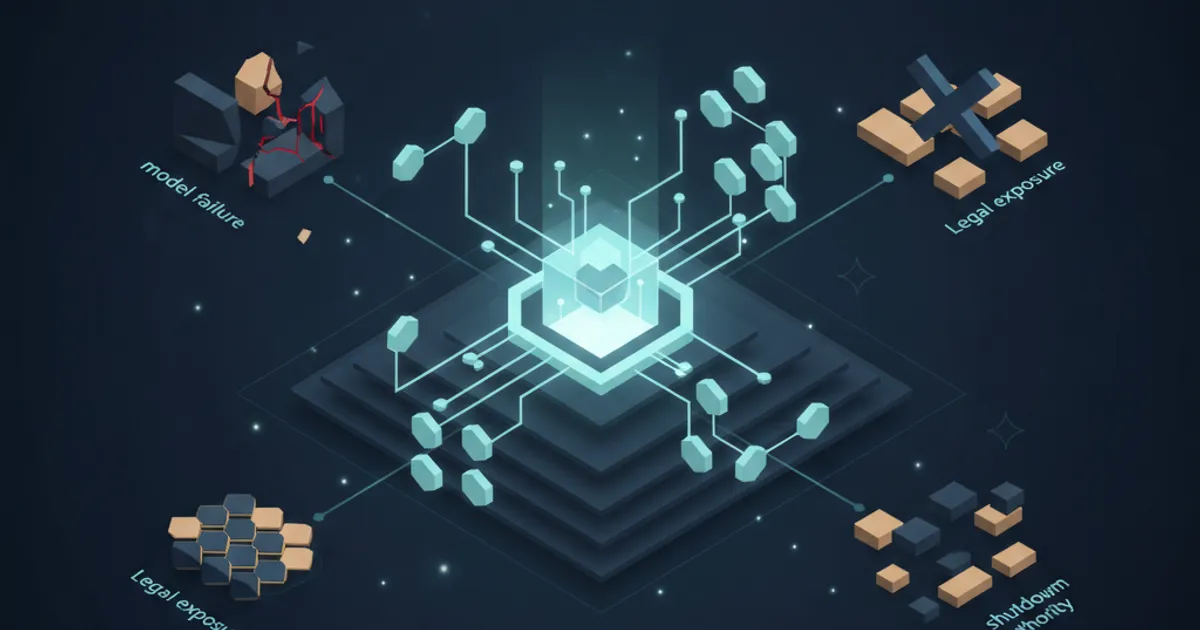
csoonline.com said on July 14, 2026, that AI incidents need new playbooks because old-school security plans were built for intrusions and outages, not for model errors, harmful outputs, or legal risk created by a system doing exactly what it was designed to do. The article framed the gap with three operational questions: Where is the AI system inventory, what happens if a production model starts generating harmful outputs, and who has the authority to take it offline.
AI incidents need their own shutdown rules.
CSO said 71% of organizations say AI has access to core business systems. That statistic matters because a model attached to customer support, finance, healthcare, or internal operations can create business impact without any external attacker being involved. CSO also argued that many organizations assume their incident response plan already covers AI, but that confidence usually fades once teams actually test a model failure scenario.
The same July 14, 2026 CSO piece said most incident response frameworks, including NIST SP 800-61, MITRE ATLAS and the GLACIS AI Incident Response Playbook, provide a taxonomy of six incident types and stop there. CSO's reported distinction was more operational: failures caused by the model itself versus failures caused by a human. Detection, containment, and legal exposure differ across those two buckets.
The short version
csoonline.com said on July 14, 2026, that AI incidents need new playbooks because standard incident response plans do not cover model failures, legal exposure, or clear shutdown authority. For small and mid-sized businesses, the practical issue is not frontier AI hype but whether an existing security plan can handle a model that quietly fails, leaks data, or has to be taken offline fast.
- CSO said legacy IR playbooks often do not map cleanly to AI systems in production.
- CSO said AI failures split into model-originated failures and human-caused failures, with different containment and legal risks.
- CSO said 71% of organizations say AI has access to core business systems.
- Recent reporting from CSO, Dark Reading, and Infosecurity Magazine described faster AI-assisted attacks and new choke points such as AI gateways.
Model failures can be incidents even without an attacker
CSO said model-originated failures include degradation, bias, and hallucinations, and that they are different from classic security events because the system can fail while dashboards still look normal. The article used a healthcare example to show why a breach-centric playbook can miss the problem entirely.
A model can fail quietly and still cause business harm.
CSO said the Epic Sepsis Model was deployed across hundreds of US hospitals and had a sensitivity of only 33% at external validation. In CSO's telling, no one attacked the model. It just stopped delivering dependable results while standard monitoring did not necessarily signal a security event. That is a useful distinction for business operators because an AI incident may begin as an accuracy, safety, or compliance problem before it looks like a cyber incident.
A July 10, 2026 csoonline.com interview added adjacent context from Check Point Software CTO Jonathan Zanger, who said AI's non-deterministic nature requires a new approach to cybersecurity that includes baking in security from the outset. That does not confirm CSO's opinion piece, but it supports the broader point that AI systems behave differently from conventional software and need different operating assumptions.
Attackers are also using AI to compress response time
A second July 14, 2026 csoonline.com report said recent incidents show attackers moving beyond LLM-written phishing lures and malware scripts to using AI across attack chains, including lateral movement. The report said security teams have spent years improving detection and response against manual hacking, and that AI is now threatening to undo those gains by reducing the time between initial access and deep compromise.
AI-assisted attacks reduce the time defenders have to react.
infosecurity-magazine.com reported on July 8, 2026, that a lone threat actor used AI to execute an attack that would otherwise have taken weeks in just 72 hours, according to Sygnia. Infosecurity Magazine said the actor used AI-assisted or agentic workflows for concurrent tasks that included searching for secrets and credentials, creating persistence, exfiltrating data from RDS databases, and performing impact actions in an AWS environment.
CSO's July 14, 2026 breach report described a similar pattern from a Sygnia investigation, saying AI attacks have graduated to handling all stages of attack chains, including parts that previously required human reasoning and environment-specific command execution. For small and mid-sized businesses, that changes the value of an AI-specific playbook: it is not only about handling faulty outputs but also about handling a faster adversary.
AI access points create new containment decisions
darkreading.com reported on July 9, 2026, that AI gateways are becoming a new attack surface because they can centralize access to models, cloud infrastructure, and identity and access management data. Dark Reading said Darktrace investigated an incident in which a threat actor gained access to an EC2 server hosting an AI gateway connected to Amazon Bedrock services and used it for cryptomining, but could also have used it to access connected models and data or pivot deeper into the cloud environment.
AI gateways can become high-value shutdown points.
Dark Reading said Darktrace could not confirm definitively how initial access was gained, and said the attacker appeared to have used brute-force login attempts. The report has not been confirmed elsewhere. Even with that caution, the operational lesson lines up with CSO's July 14, 2026 argument about shutdown authority. If a company does not know who can disable a model, revoke an AI gateway, or cut off a cloud connector, then containment may stall during the most time-sensitive part of an incident.
An itnews.com.au report published July 10, 2026, added a data-governance angle, saying organizations are finding that existing governance, classification, and access controls were never designed for AI-era workloads. iTnews said the result is increased risk that personally identifiable information, intellectual property, and commercially sensitive information can be exposed, misused, or leaked into public or third-party environments.
The missing pieces are inventory, data, and authority
CSO's July 14, 2026 reporting points to a practical build list for an AI incident playbook: keep an AI system inventory, define separate paths for model-originated and human-caused failures, and assign authority to take production systems offline. Those steps are less flashy than a new model release, but they address the operational gap the article described.
Inventory beats improvisation during an AI incident.
A July 9, 2026 csoonline.com opinion article provided useful supporting context on why AI security tools often underperform. CSO said the problem is frequently upstream in fragmented telemetry, inconsistent schemas, and stale behavioral baselines. The same article said large enterprises often use 83 different security tools and that SOC teams absorb nearly 3,000 alerts per day, with 63 percent going unaddressed. Those figures describe large enterprises, not SMBs, but they illustrate why an AI incident plan cannot depend on perfect visibility.
A July 13, 2026 forbes.com article argued that a new discipline, AI software security, is needed as AI moves into software development and enterprise operations. Forbes is an analysis source, not the originating report, but its framing matches the operational theme across CSO, Dark Reading, and Infosecurity Magazine: AI changes what must be secured, who must respond, and what counts as an incident.
Tron's take
My reading is that the most important part of this story for a small or mid-sized business is not the abstract debate over AI safety. It is the narrower operations question CSO raised on July 14, 2026: whether anyone inside the company knows what AI systems are in production, what harmful-output scenario would trigger escalation, and who can shut a system down. Many SMBs can answer those questions for email, endpoint, and cloud tools. Fewer can answer them for copilots, chatbots, retrieval systems, or AI features embedded by software vendors.
Most SMBs should adopt proven AI controls before chasing new AI releases.
My take is that deliberate adoption fits the facts better than panic or dismissal. The reports from CSO, Dark Reading, and Infosecurity Magazine suggest two separate risks: AI systems can fail on their own, and attackers can use AI to move faster once inside. For an SMB, that means the first worthwhile step is usually a simple inventory and authority map, not a wholesale platform overhaul. If the business depends on managed IT, security assessments, or incident response planning to build that map, XL.net sells those services.
Questions I'd expect
Why do AI incidents need a different playbook?
CSO said on July 14, 2026, that standard incident response plans miss model failures, harmful outputs, legal exposure, and clear shutdown authority.
What is the main difference between an AI incident and a classic cyber incident?
CSO said AI incidents can be model-originated failures such as degradation, bias, and hallucinations, not just human-caused attacks or misuse.
What source supports the claim that AI systems are widely connected to the business?
CSO said on July 14, 2026, that 71% of organizations say AI has access to core business systems.
Are attackers already using AI in real intrusions?
Yes. Infosecurity Magazine reported on July 8, 2026, that a threat actor used AI to compress an attack that would otherwise have taken weeks into 72 hours, according to Sygnia.